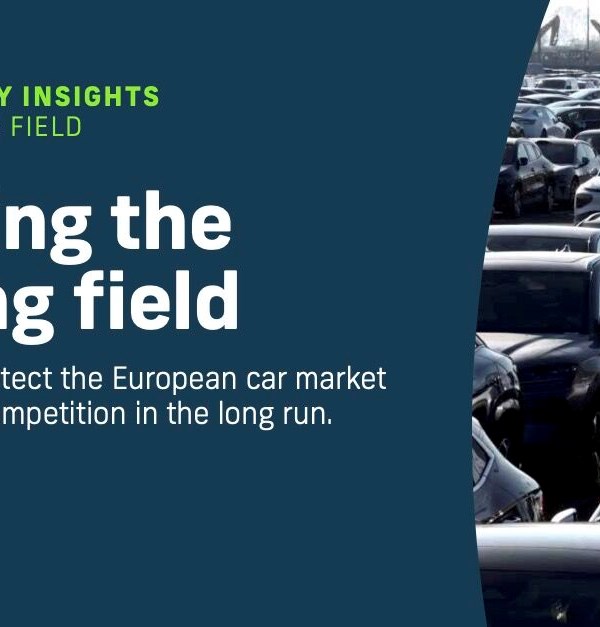
Levelling the playing field
Everyone who’s interested in the relationship between the West and China and knows how markets work, probably saw it coming that import tariffs would not help protect the European car market in the long term.
The result is that we see an increased number of Chinese brands building or planning local manufacturing facilities in Europe in order to avoid our tariffs. Chinese car manufacturer BYD, is building a plant in the South of Hungary as we speak, with a projected volume of 200,000 cars per year. Geely announced about a month ago it is considering local production in Europe. And very recently, Chinese state-owned carmaker GAC has also announced that it is exploring the manufacture of EVs in Europe.
The problem with tariffs in this specific case is that Chinese brands are exceedingly agile. They are used to functioning in a highly competitive local market where each new business model is met with hundreds of copycats disrupting their invention. This forces them to permanently innovate, and at a very fast pace. The European mindset is quite different. Faced with stumbling blocks and difficulties, we are a lot less agile and resourceful. But the Chinese adapt fast, and it’s clear they are doing exactly that in this exact situation.
That's why I often say the top 10 car brands of the next decade will likely be Chinese companies that haven't even been founded yet. While launching a new car company in Europe is incredibly challenging, in China, new brands are emerging very rapidly.
I have always believed that import duties are counterproductive. A much more efficient way to help our local car brands would be to work with certifications that force the Chinese brands to make significant investments that will level the playing field and also benefit Europe. For instance, the certifications could stipulate:
Terms like these will force the Chinese brands to make heavy investments, which will level the playing field, create a more ethically and sustainably balanced market and will result in competitive conditions that are a lot more even and beneficial for innovation.
The problem with tariffs in this specific case is that Chinese brands are exceedingly agile. They are used to functioning in a highly competitive local market where each new business model is met with hundreds of copycats disrupting their invention. This forces them to permanently innovate, and at a very fast pace. The European mindset is quite different. Faced with stumbling blocks and difficulties, we are a lot less agile and resourceful. But the Chinese adapt fast, and it’s clear they are doing exactly that in this exact situation.
That's why I often say the top 10 car brands of the next decade will likely be Chinese companies that haven't even been founded yet. While launching a new car company in Europe is incredibly challenging, in China, new brands are emerging very rapidly.
I have always believed that import duties are counterproductive. A much more efficient way to help our local car brands would be to work with certifications that force the Chinese brands to make significant investments that will level the playing field and also benefit Europe. For instance, the certifications could stipulate:
- That the cars and batteries that they produce need to be recyclable up to a certain level
- That they can prove that the working conditions in their factories are safe and ethical
- That the material of their cars and batteries answer to certain conditions
- That they need to collaborate with European companies for certain parts of production
- That they maybe even share some of their IP with Europe. That may sound strange but that was exactly what China forced Siemens to do when they built their hydroelectric power stations over there.
Terms like these will force the Chinese brands to make heavy investments, which will level the playing field, create a more ethically and sustainably balanced market and will result in competitive conditions that are a lot more even and beneficial for innovation.

